



Wrought Iron & Glass Canopies
THE ELEGANCE OF WROUGHT IRON CANOPIES:
Canopies serve not only a practical purpose, providing shelter from the elements, but they also offer an opportunity to enhance the architectural aesthetics of buildings. Two materials stand out for their distinctive qualities and applications in canopy design: wrought iron and the combination of glass and stainless steel.
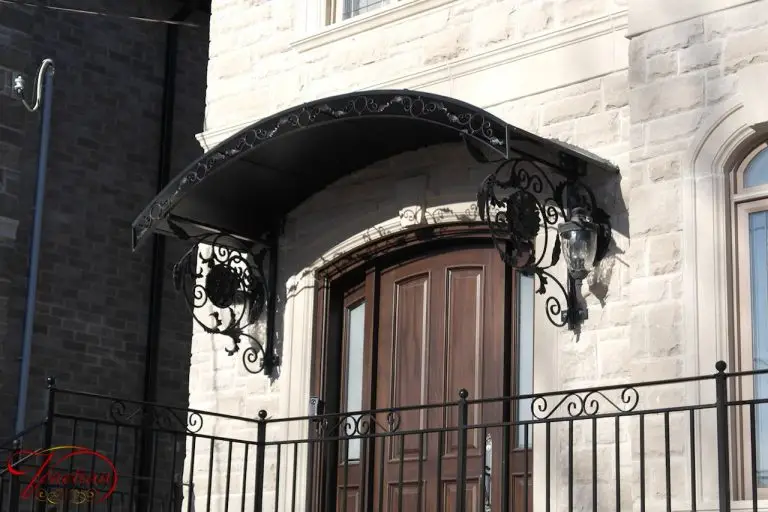
Wrought iron, known for its durability and classic beauty, has been used for centuries in architectural designs. Its malleability allows for intricate patterns and designs, making each wrought iron canopy a piece of art. These canopies often evoke a sense of history and tradition. They are not only sturdy but also offer a timeless elegance that can complement any building style.
GLASS & STAINLESS STEEL CANOPIES:
On the other hand, glass and stainless steel canopies represent modernity and innovation. The sleek lines and the shine of stainless steel combined with the transparency of glass create a contemporary look that is both stylish and functional. These materials allow for the creation of minimalist designs that let natural light filter through, brightening the space beneath while providing protection. They are particularly favored for modern commercial and residential buildings, where the emphasis is on clean lines and open spaces.
THE CHOICE:
The choice between wrought iron and glass & stainless steel canopies depends on various factors, including the architectural style of the building, maintenance considerations, and the desired visual impact. Wrought iron may require more maintenance to prevent rust and preserve its appearance, while glass and stainless steel are more resistant to weathering and easier to clean.
CONCLUSION
In conclusion, whether you choose the classic appeal of wrought iron or the sleek modernity of glass and stainless steel, canopies are an excellent addition to any building. They not only protect against the weather but also significantly contribute to the building’s character and curb appeal. As architectural elements, they bridge functionality and design, creating inviting and protected spaces for people to enjoy.

